Under-bed storage looks like the easiest win in a small bedroom. It’s a huge stretch of unused space at your disposal as you organize your small home. But most people don’t know which one is the best fit and end up buying the wrong type the first time. Either the bin is too tall to slide under the bed frame, the bag sags and collapses, or the wheeled cart rolls everywhere on a carpet it was never meant for. The problem usually isn’t the product. It’s matching the right type to your bed, your floor, and what you’re actually storing.
This guide compares the three main types, shows you how to measure before you buy, and explains which one fits you best accordingly.
Quick Answer:
The best under-bed storage depends on three things: your bed’s clearance height, your floor type, and what you’re storing. Rolling bins suit hard floors and frequently used items, soft zippered bags suit low clearance and off-season bedding, and rigid lidded bins without wheels suit carpet and long-term storage. Measure your clearance before buying anything.
Step 1: Measure Before You Buy
This one step prevents most returns. Under-bed storage is sold by listed dimensions, and a container that’s half an inch too tall simply won’t fit.
- Measure clearance height. Measure from the floor to the lowest point of the bed frame or slats, not the mattress. Check the middle of the bed too, since support beams or center legs sometimes sit lower.
- Measure usable depth. Measure from the edge of the bed toward the wall or headboard, leaving a few inches so you can actually slide containers in and out.
- Note any obstructions. Center support legs, cross beams, and bed rails can block a container that would otherwise fit.
- Subtract a small buffer. Aim for a container at least half an inch shorter than your measured clearance, so it slides without scraping.
Comparison of The Three Main Types
| Type | Best for | Watch out for |
|---|---|---|
| Rolling bins (hard-sided, wheels) | Hard floors, items you reach for often | Wheels can sink or stick on thick carpet; adds height |
| Soft zippered bags | Low clearance, bulky off-season items | Can sag, offer less protection, harder to slide when full |
| Rigid lidded bins (no wheels) | Carpet, long-term storage, dust protection | Heavier to pull out when full; needs a sliding surface |
1. Rolling Under-Bed Bins
Hard-sided containers with wheels are the most convenient option. You can pull them out with one hand instead of crawling under the bed.
Best for: hard floors (wood, laminate, tile) and anything you access regularly, such as extra bedding, shoes, or everyday clothing.
Things to check before buying:
- Wheel quality. Hard plastic wheels work on smooth floors, but they struggle on carpet. If you have carpet, look for larger or rubberized wheels, or choose a no-wheel option instead.
- Total height with wheels. The listed height should include the wheels, not just the container body.
- Lid design. A lid that lifts fully off is easier to use than a hinged one that bumps against the bed frame.
2. Soft Zippered Under-Bed Bags
These fabric storage bags have a flat, flexible profile, which makes them the go-to when clearance is very low.
Best for: bed frames with tight clearance, and bulky soft items like comforters, blankets, seasonal clothing, or spare pillows.
Things to check before buying:
- Structure. Look for bags with a reinforced base or internal support. Fully floppy bags tend to sag and become awkward to slide.
- Handles and zipper quality. Reinforced handles make pulling out a loaded bag much easier, and a sturdy zipper matters since it’s the part that fails first.
- A clear window or label pocket. Without one, you’ll forget what’s inside each bag.
A useful tip: Pair these with vacuum storage bags if you want to fit even more bulky bedding under a low frame.
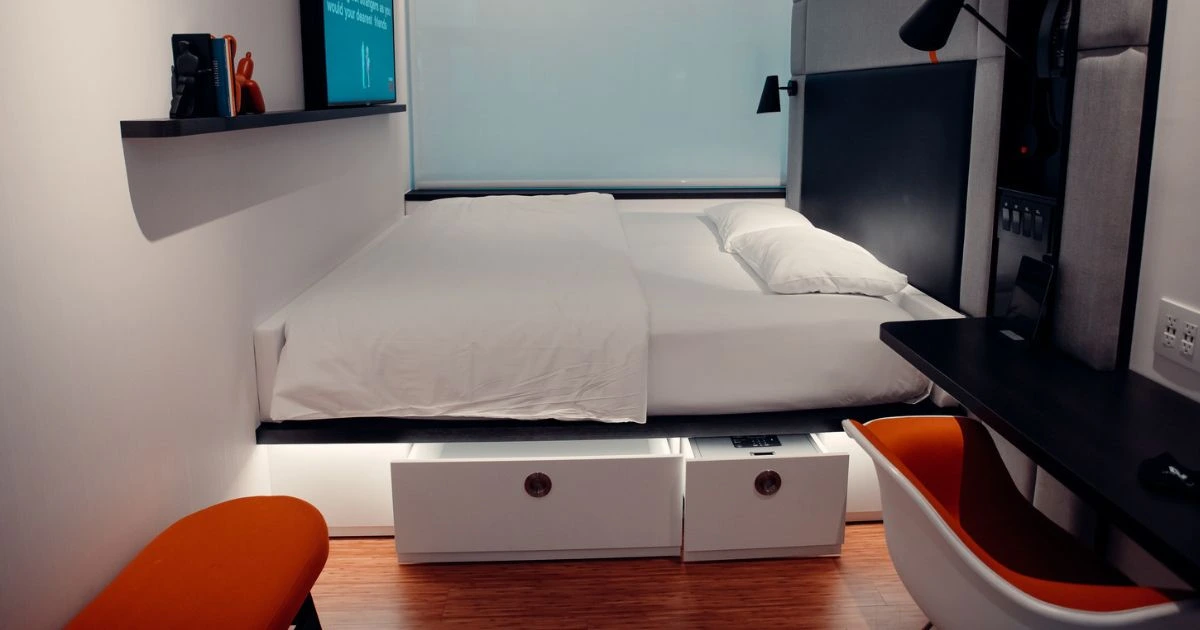
3. Rigid Lidded Bins (No Wheels)
Plain hard-sided bins with snap-on lids are the simplest and most durable option, and often the best value.
Best for: carpeted bedrooms, long-term storage of things you rarely need, and anything that needs dust or moisture protection, like keepsakes, documents, or holiday decor.
Things to check before buying:
- Stackable design. If you may use the bins elsewhere later, such as a closet shelf, choose a stackable design that stays useful beyond the bed.
- Handles. Built-in handles matter more here, since there are no wheels.
- Lid seal. A tight-fitting lid keeps out dust, which matters for stored linens and clothing.
A simple trick: Place a thin piece of cardboard or a felt furniture slider under a no-wheel bin to help it glide across the carpet easily.
What Actually Belongs Under a Bed
Not everything stores well in a spot that gets little airflow and collects dust.
Works well:
- Off-season clothing and bedding (see the vacuum bag tip above)
- Shoes (in bins or low shoe organizers)
- Extra linens and towels
- Holiday decor and gift wrap
- Rarely used items like luggage or sports equipment
Better stored elsewhere:
- Anything sensitive to moisture or temperature swings, unless sealed in an airtight container
- Food of any kind
- Items you use daily, since pulling a bin out every day gets old quickly
Common Mistakes to Avoid
- Buying before measuring. This accounts for most returns, as covered in Step 1.
- Choosing wheels for thick carpet. Wheeled bins often stick or fail to roll on plush carpet. A no-wheel bin with a slider is more reliable.
- Overloading soft bags. A bag packed too full is hard to slide and can strain its seams and zipper.
- Ignoring dust. Open or loosely lidded containers collect dust quickly. If you’re storing clothing or linens, a closed lid or zipper is worth prioritizing.
- Skipping labels. If you can’t tell what’s inside, you won’t use the space as well as you could.
Frequently Asked Questions
Rigid lidded bins without wheels are generally the most reliable choice for carpet, since wheels tend to stick or sink into thicker carpet fibers. Placing a felt slider or thin piece of cardboard underneath can help them glide.
It depends on your bed’s clearance and what you’re storing. Soft zippered bags work best for low clearance and bulky soft items like bedding, while hard-sided bins offer more protection and structure for shoes, folded clothing, and items that need dust protection.
Measure from the floor to the lowest part of your bed frame or slats. Choose a container at least half an inch shorter than that measurement so it slides in and out easily. Many low-profile bins and bags are designed for clearances of around 6 inches or less, though this varies by product.
Yes, especially off-season clothing, as long as it’s in a closed container or zippered bag to keep out dust. Vacuum storage bags can compress bulky items to save space, though they’re best for items that won’t be damaged by compression.
If your bed sits directly on the floor or has very low clearance, bed risers can add several inches of height, creating usable storage space. Check the weight rating on any riser before using it.