If you’ve searched “how to organize a small apartment” and immediately felt more overwhelmed than when you started, you’re not alone. Most organization content jumps straight to product recommendations like bins, shelves, labels before answering the actual first question: Where do I even begin?
This guide has an entirely different purpose. No product list here. Nada. Just a simple, honest system for approaching a small space that feels too cluttered. So that whatever you do next actually sticks.
Quick Answer:
The most effective way to start organizing a small space is to work one zone at a time. Not room by room but starting with the area that causes you the most daily frustration. Sort everything into “Keep”, “Relocate”, and “Let Go” before buying any storage products at all.
Why Most Organization Advice Fails in a Small Space
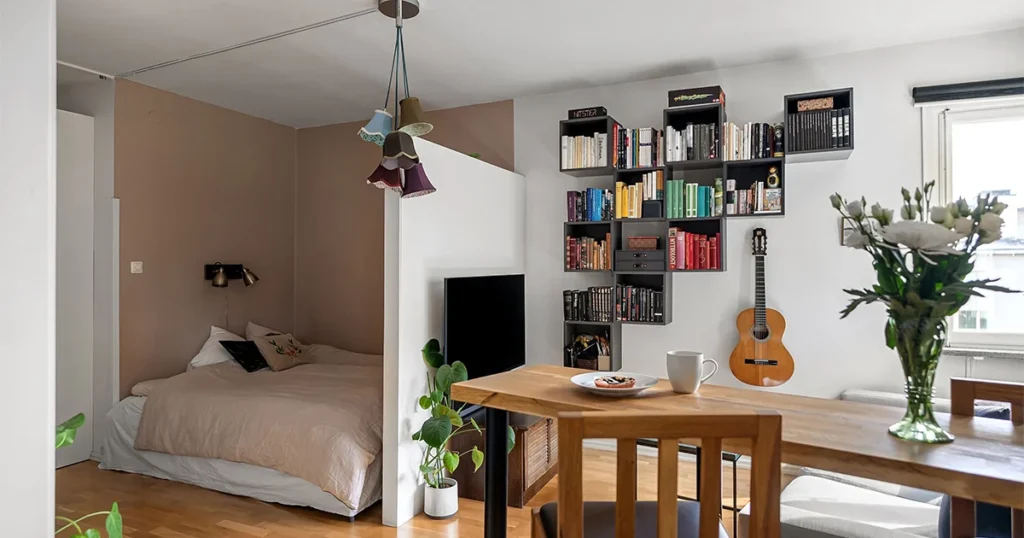
Standard organization advice is often written for larger homes, where you can dedicate a full weekend to “the closet” or “the kitchen” in isolation. In a small space, everything is connected and is in a small square foot. Your closet overflow ends up on a chair, which pushes clutter onto the counter, which spreads into the one flat surface in your living room. Organizing one enclosed room at a time doesn’t address that ripple effect.
The fix isn’t a bigger space, it’s a different approach. Baby steps.
Step 1: Pick One Zone, Not One Room
Instead of “I’m going to organize my bedroom,” pick a specific zone that’s actually causing you stress: the chair that’s become a clothes pile, the kitchen counter that collects mail and random items, the entryway floor where shoes and bags land. Small, specific zones are genuinely finished in an hour or two than whole rooms in a small apartment because everything bleeds together.
Why this matters: Finishing a small zone completely gives you a real, visible win. Starting an entire room and running out of time or energy halfway through is what makes organizing feel like it never works.
Step 2: Sort Into Three Piles — Keep, Relocate, Let Go
For whatever’s in your chosen zone, sort everything into exactly three categories:
- Keep — belongs in this exact spot, stays right here.
- Relocate — you need it, but it belongs somewhere else in your home. It’s the classic “why is this here” item.
- Let Go — donate, sell, or trash; you genuinely don’t need or want it.
Resist the urge to add a fourth “maybe” pile. Indecision is exactly what creates clutter in a small space in the first place. If you’re genuinely unsure, give yourself one honest rule: if you haven’t used it in the last 6-12 months and it’s not seasonal or sentimental, it goes in “Let Go.”

Step 3: Deal With “Relocate” Immediately, Not Later
This step gets skipped constantly, and it’s why organizing sessions fall apart. Don’t pile “Relocate” items in a corner to deal with “later”. The “later” rarely comes, and that pile just becomes a new clutter. Take five extra minutes right now to actually walk each item to where it belongs.
Step 4: Only Now — Consider What Storage You Actually Need
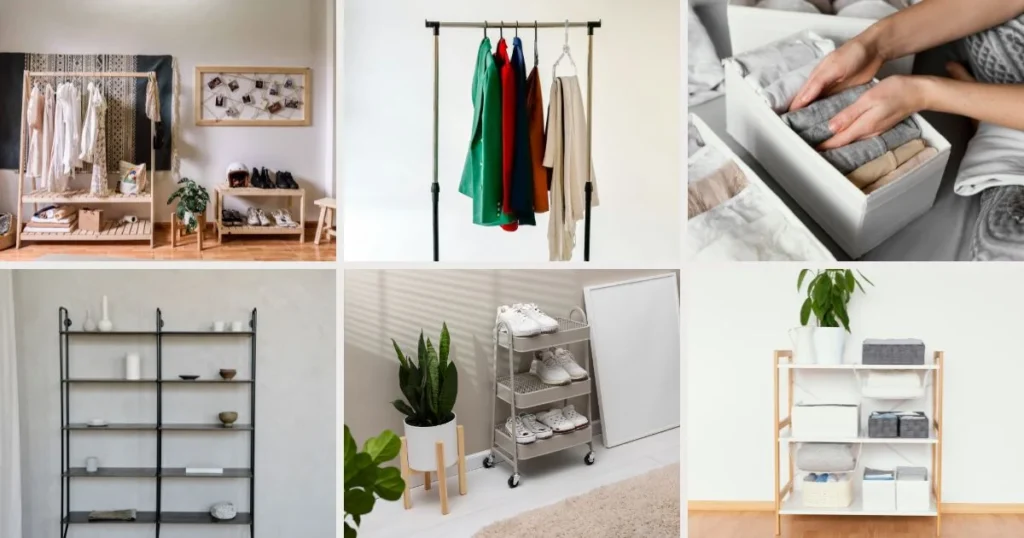
This is the part most guides start with, and it’s exactly why they don’t work as well as they should. Once you’ve sorted a zone, you’ll have a genuinely accurate picture of what you’re storing and how much space it needs instead of guessing and buying bins that are the wrong size, or buying storage for items you were about to get rid of anyway.
At this point, if you need actual product ideas, our budget organization guide and renter’s guide to removable solutions cover specific, tested options depending on your situation.
Step 5: Repeat, One Zone at a Time
Once your first zone is done, move to the next one that bothers you most. There’s no required order. Just tackle whatever’s genuinely frustrating you day to day. Small spaces respond well to this zone-by-zone approach because each win is real and visible, and momentum builds naturally instead of the whole project feeling like one giant, unfinishable task.
A Note on “Perfect” Organization
Your space doesn’t need to look like a styled photo to be organized. It needs to function for how you actually live. If a system requires constant upkeep you don’t realistically have time for, it’s not the right system for you even if it looks impressive. The best organization system is the one you’ll actually maintain.
What to Read Next:
- Renting? → Our Complete Renter’s Guide to Removable Everything covers damage-free storage and decor solutions
- Own your space? → Our Small Space Organization for Homeowners guide covers permanent, higher-capacity solutions
- Working with a tight budget? → Our 25 Organization Ideas Under $50 guide has real prices, not vague suggestions
Frequently Asked Questions
Start with a single, specific zone like one chair, counter, or corner rather than an entire room. Sort everything in that zone into Keep, Relocate, and Let Go before considering any storage products.
A helpful rule: if you haven’t used an item in the last 6-12 months and it isn’t seasonal or sentimental, it’s a strong candidate to let go. Avoid creating a “maybe” pile, since indecision is often what causes clutter to build up in the first place.
After. Sorting your items first gives you an accurate picture of what you actually need to store and how much space it requires, which prevents buying the wrong size or amount of storage product.
It depends entirely on how much you’re working through, but tackling one specific zone (not a whole room) typically takes one to two hours. Working zone by zone, rather than trying to finish an entire apartment in one session, tends to be far more efficient.