Almost every small space organization guide online assumes you’re renting, which means no drilling, no permanent change without touching your landlord’s walls. What if you own your small home? None of those restrictions actually apply to you, and honestly, most homeowners don’t realize how much more they can do within their small square feet.
If you own a small space, you have an advantage renters don’t have. Built-ins. Real shelving anchored into studs. Structural changes. All fully on the table. This guide is specifically for you.
Quick Answer:
Homeowners with small spaces get the biggest wins from permanent, wall-anchored solutions like built-in shelving, closet systems mounted into studs, and structural storage like under-stair or wall-recess storage — options that go well beyond what a renter-safe adhesive product can achieve.
Why Small Space Owners Have More Freedom In Home Organization
As a small homeowner, you can organize your small square feet freely, unlike a rental. A properly anchored shelf into wall studs holds significantly more weight than an adhesive strip ever will, and built-in solutions use dead spaces like the gap beside a fireplace or the area under a staircase that no removable product can touch. So, you can go for more efficient, durable, and permanent solutions.
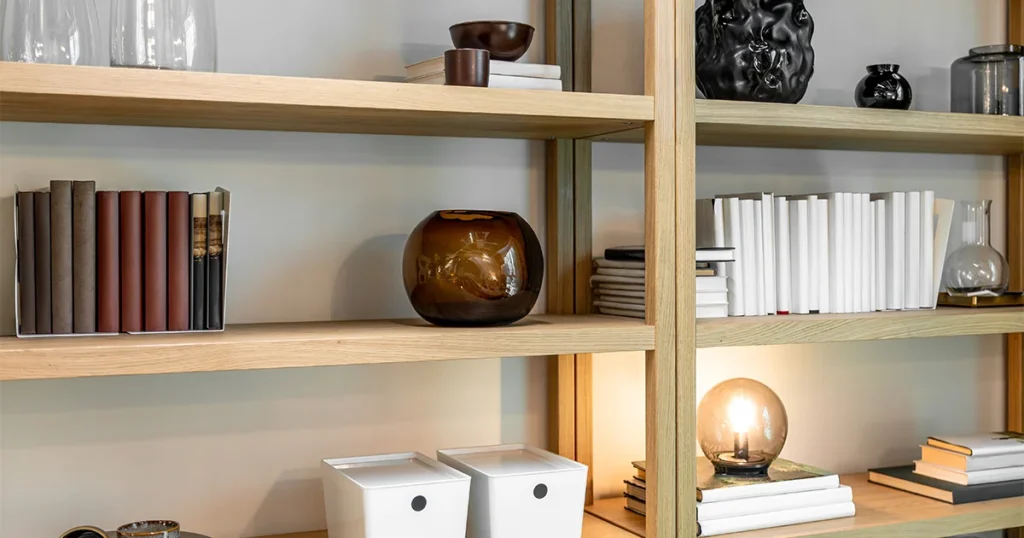
1. Built-In Shelves and Cabinets
This is the single highest-capacity storage upgrade available to a small-space homeowner.
Where it delivers the most value
- Alcoves beside a fireplace or chimney breast — dead space in nearly every small older home, perfect for floor-to-ceiling built-ins
- Under staircases — often totally unused, can become drawers, shelves, or even a small closet
- Wall recesses — any inset section of wall can be framed out into shallow built-in shelves without losing meaningful floor space
What to know before starting
Built-ins can be a DIY project with basic carpentry skills (simple shelf-and-frame builds) or a contracted job for anything load-bearing-adjacent or more custom. Get a stud finder regardless, anchoring into actual studs, not just drywall, is what makes this option so much sturdier than adhesive alternatives.
2. Anchored Closet Systems
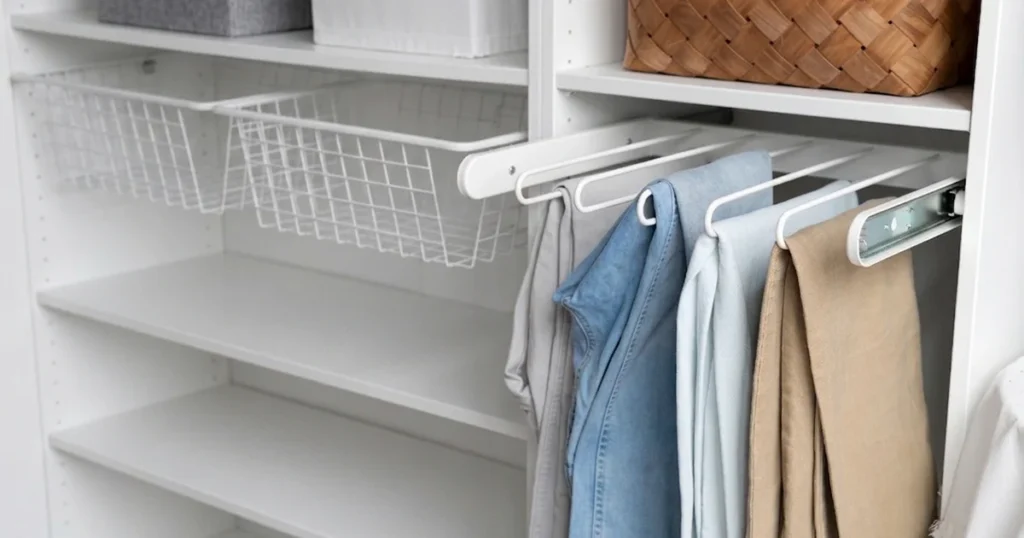
Unlike tension-rod or adhesive closet organizers, homeowners can install fully anchored, modular closet systems — wire or wood-panel shelving mounted directly into wall studs.
Why this matters
Anchored systems hold more weight dramatically and are customizable to the exact dimensions of your closet, rather than working around a freestanding unit’s fixed size. For genuinely small closets, this maximizes literally every inch, corner to corner, in a way a freestanding tension system can’t.
3. Structural Storage
This is where owning really pulls ahead. These additions require cutting into a wall or floor, which no renter could ever do.
- Recessed wall shelving (cutting a shallow niche into a wall between studs) — great for bathrooms, hallways, or a kitchen spice section, and doesn’t lose any usable floor space at all
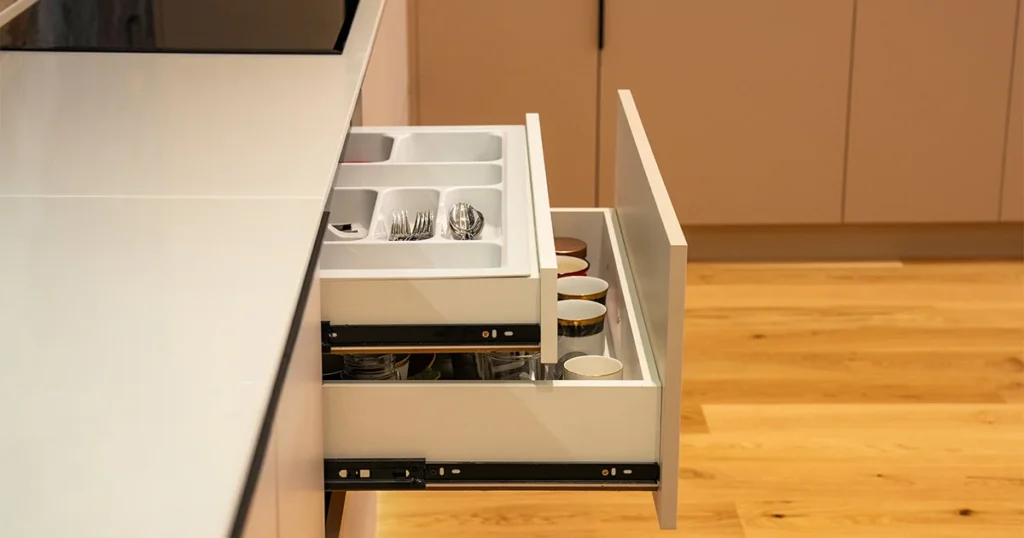
- Toe-kick drawers (thin drawers built into the base of kitchen cabinets, using otherwise wasted space) — a favorite in small-kitchen renovations for exactly this reason
- Loft/mezzanine storage — if your ceiling height allows, adding a structural loft platform above a closet or utility area can add meaningful square footage without any floor-space cost
These are bigger projects that most homeowners bring in a contractor for structural work like this but they represent storage capacity a rental simply can never offer
4. Furniture With Real, Permanent Mounting
Renters are often limited to freestanding furniture for safety reasons (easily removable, nothing that could damage a wall on move-out). As an owner, you can safely anchor furniture to walls which actually opens up taller, more storage-dense furniture options that would otherwise be a tip-over risk.
- Tall, wall-anchored bookcases — safely secured, so you can go taller and narrower than freestanding options allow, maximizing vertical storage in a small footprint
- Wall-mounted, fold-down desks or tables — hinged directly into studs, fully collapsible, ideal for tiny home offices or dining nooks
A Practical Note on Where to Start
If this all feels like a lot at once, one step at a time. You can start with the built-in shelving in any dead-space area before tackling anything structural. It’s the best value-to-effort ratio on this list, and gives you a feel for what’s actually achievable in your specific layout before committing to bigger projects.
Frequently Asked Questions
The ability to anchor directly into wall studs and make permanent or structural changes like built-in shelves, anchored closet systems, and recessed wall storage. All of these hold significantly more weight and use space more efficiently than any renter-safe, non-damaging alternative.
Not necessarily. Simple shelf-and-frame builds in an alcove or wall recess are a manageable DIY project with basic carpentry skills and a stud finder. More complex or structural additions, like toe-kick drawers or loft platforms, typically benefit from professional help.
Yes. Anchoring tall furniture like bookcases directly into wall studs significantly reduces tip-over risk, which also means you can safely choose taller, narrower, more storage-dense furniture than you could if it needed to stand freely and stable on its own.
Under staircases and wall alcoves (like the space beside a fireplace) are consistently the most overlooked storage opportunities in small homes. Both are typically wasted dead space that can become significant built-in storage with relatively simple carpentry.